Projects
McFadden Engineering is a fast growing firm and serves many municipalities and agencies across the southeastern United States. Some of our clients include the US Army Corps of Engineers, City of Robertsdale, Alabama, and the Mobile Area Water and Sewer System.
Our company continues to strive in providing the best possible service knowing that it builds our reputation with every project we undertake.
We invite you to explore our completed projects from across the southeastern United States and see what McFadden Engineering has to offer.
Wastewater Treatment Plant Upgrade
Robertsdale, Alabama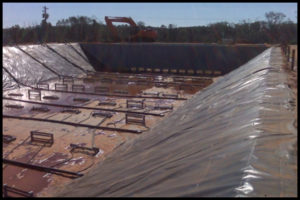
McFadden Engineering has provided the City of Robertsdale comprehensive environmental consulting services since 1994. Since 2006, McFadden Engineering has served as the program manager and engineering consultant for implementation of the recommended improvements, including the relevant wastewater project were McFadden was retained by the City of Robertsdale, Alabama to design a 1.5-mgd advanced WWTP (Biolac Process®) capable of discharging more than 95-percent treated effluent.
As part of the design process, we evaluated a number of alternatives and the decision was made to upgrade the lagoons to a Biolac® activated sludge process which would allow for better control of sludge age and other parameters that would affect the nitrification rate within the basins.
The Biolac® has the capability through addition of the Wave-Ox Process® to reduce total nitrogen via the denitrification process. The build-up of settled sludge within the basins had prompted operators to manually remove the sludge in order to optimize the treatment process. This required the basins to be drained and sludge manually removed via sump pumps to the sludge lagoon, thereby further complicating the maintenance of an adequate nitrifier population. The upgrade to the Biolac® process has aided in reducing the turbidity levels, allowing the UV system to operate as designed.
In addition, we have conducted a significant level of water quality modeling for this project to determine impacts of the wastewater effluent on the receiving waters. We modified ADEM’s water model to better reflect stream conditions and also for discharge requirements.
General services provided by McFadden Engineering included obtaining the ADEM NPDES permit application, water quality model of Rock Creek using ADEMs steady state water quality model, operator training, wastewater treatment plant layout and design and construction engineering. In addition, McFadden was also completed the design of four pump stations, force mains, and gravity pipe that will, upon completion of construction, allow the city to abandon its main interceptor line to the WWTP and reduce Infiltration and Inflow (I/I) to the WWTP.
Oil Recovery Company
Mobile, Alabama
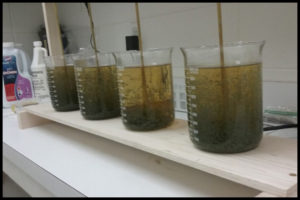
Oil Recovery Company of Alabama, Inc. (ORC) is a full-service environmental control, cleanup and disposal company specializing in industrial and marine work that provides 24-hour service to government, marine, and industrial organizations. McFadden Engineering was retained by ORC to evaluate its wastewater treatment facility in Mobile, Alabama. The purpose of the study was to develop recommendations to improve treatment efficiency and make any recommendations for process additions and/or removal. Bench scale mixing studies were performed to simulate the treatment process. The study focused on the optimization of the pH values in the wastewater to facilitate efficiency in the pH dependent flocculation process and the amount of clay-based coagulant added for flocculation and solids removal. In addition, MEI performed an evaluation of the oxidation chemistry as part of the solids removal process and VOC reduction. Based on the findings of the evaluation, a revised treatment train was developed, and recommendations were made to ORC to assist their operators in maintaining plant compliance. Through this evaluation and treatability study, the optimal process pH levels and the appropriate quantities of oxidation chemicals needed for the process were established.
MH WIRTH Water Reclamation System
Mobile, Alabama Facility
MHWirth is a leading global provider of drilling solutions for the offshore market. Its Mobile, Alabama facility has a support operation that cleans, evaluates, and repairs drilling rods for reuse in drilling operations in the Gulf of Mexico. The washdown water from their cleaning operation was being containerized leading to additional expenses from high water usage and disposal costs. McFadden Engineering was retained to develop a water treatment system for this washdown water. MEI analyzed the water and developed a treatment system that included a dissolved air flotation (DAF) system followed by filtration to remove solids. The treated water was then pumped to a storage tank on site to be reused in the drilling rod cleaning process. Through the implementation of this system, MHWirth has minimized the environmental footprint of the cleaning process by reducing the amount of water used and disposal costs.

Development of Pollution Abatement Plan Hatters Tenant in Common Dirt Pit Mobile County, Alabama
McFadden Engineering developed a Pollution Abatement Plan (PAP) as part of a permit application for National Pollutant Discharge Elimination System (NPDES) permit for Hatter Tenants in Common Dirt Pit. The PAP included the development of a site-specific best management practices to guide the operator in the appropriate methods to divert surface runoff, sediment control measures, and site reclamation activities. MEI also identified the adjacent streams and water bodies that could be affected by fa cility operations, developed a site drainage and erosion control plan to be implemented during excavation activities, and estimated runoff storage requirements to retain storm water during rain events.

Spill Prevention Control and Countermeasure and Response Plan Development
The Clean Water Act contains provisions requiring facilities that could reasonably be expected to discharge oil (or petroleum products) in harmful quantities into or upon navigable U.S. waters to prepare a Spill Prevention Control & Countermeasure (SPCC) plan. Unlike oil spill contingency plans that typically address spill cleanup measures after a spill has occurred, SPCC Plans are adopted by facilities to assist in preventing spills. In the event of a spill, these plans are used to guide your facility’s response and procedures for what should be done, who should be contacted, etc. if an oil spill occurs. SPCC plans demonstrate to the EPA that facilities are prepared for such an incident. Each SPCC Plan is unique to its facility, but all plans must include certain elements such as oil handling operations, containment requirements, spill prevention practices, discharge or drainage control, designated personnel and equipment for spill response, and best management practices to hopefully prevent a release at the facility. MEI is experienced in the development of these plans for facilities and have assisted our clients with compliance audits, employee training, existing plan reviews, and evaluation of secondary containment for storage facilities.
McFadden Eningeering has developed and implemented SPCC Plans for clients such as:
- Spire Gulf (Mobile, AL Facility)
- University of Mobile
- Mobile River Terminal
- Warrior and Gulf Navigation Company
- Damrich Coatings, Inc.


NPDES Compliance Sampling
 Authorized by the Clean Water Act, the National Pollutant Discharge Elimination System (NPDES) program requires that facilities discharging into the waters of the United States must be permitted. The NPDES has separate permitting programs for process wastewater and storm water. McFadden Engineering can assist with permitting and compliance in NPDES permits for direct discharges, pre-treatment permits for indirect discharges, land application, UIC permits for subsurface injection, and water reuse permits. MEI is also experienced in storm eater Permitting and SWPPP development for construction industrial activities (general and individual permits).
Compliance monitoring is a cornerstone of the Environmental Protection Agency’s (EPA’s) program to achieve clean water. The primary goal of EPA compliance monitoring efforts, such as on-site inspections and effluent monitoring, is to ensure and document whether entities regulated under the NPDES and pretreatment programs are complying with their Clean Water Act (CWA) obligations. Because of our knowledge of analytical testing methods, treatment system operations, and permit obligations, MEI is the perfect choice for collecting discharge samples for permit compliance, documenting compliance and addressing non-compliance issues immediately after they occur.
McFadden Engineering currently assists numerous clients with permit compliance including:
- Washington County Board of Education (Leroy and Fruitdale High Schools)
- Monroe County Board of Education (JF Shields High School)
- Spire Gulf, Inc.
- University of Mobile
- Rich’s Car Wash
- Coast Seafood
- Weyerhaeuser (Castleberry, Alabama Facility)
Attalla Water Works Board
Attalla, Alabama
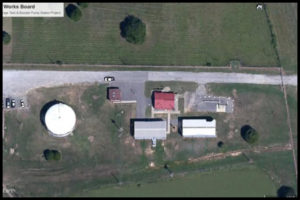
McFadden Engineering (MEI) assisted the Attalla Water Works Board (AWWB) with expanding and upgrading its water treatment facility in Etowah County, Alabama. MEI assisted AWWB with an evaluation of the existing equipment, design of new facilities and the implementation of a water treatment facility for the community to improve water pressures throughout the water distribution system. MEI provided design services for the piping and connection of two groundwater wells to a ground storage tank, specifying chlorine equipment with a building for disinfection purposes, and a booster pump station to provide water to the distribution system. As part of its services to AWWB, MEI assisted with permitting of the facility through the Alabama Department of Environmental Management (ADEM), development of construction documents, and observation of construction activities.
Site Assessment of Former Food Tiger Grocery Store
Partridge, Smith PC
Site Assessment of Former Food Tiger Grocery Store
 In February 2011, McFadden Engineering was retained by Partridge, Smith PC to assess a former Food Tiger grocery store site in midtown Mobile, Alabama. The previous uses of surrounding properties for dry cleaning activities led to the investigation for potential contaminants on the subject property. Three soil borings were advanced to a depth of 40’ below land surface. Each boring was logged for lithology and noticeable odors. Following completion, a permanent groundwater monitoring well was installed in each soil boring. Two of the monitoring well locations were selected to confirm or deny the presence of volatile organic compounds previously detected by others at the site while the third well location was selected to determine groundwater flow direction.
Each monitoring well location was surveyed for location and height. Static water levels in the wells were measured with an electronic water level indicator to determine groundwater flow direction. Groundwater samples were collected from each well and submitted for laboratory analysis of volatile organics that might be associated with the dry cleaning facility previously located adjacent to the site. Four organic compounds were detected, however, each compound was detected at a level below the Alabama Department of Environmental Management (ADEM) Screening Values for drinking water. Although the presence of these compounds was confirmed in groundwater, they were detected at concentrations that were below action levels. As a result of this investigation, development was able to proceed allowing the property to be redeveloped into a social-services building for the Catholic Archdiocese of Mobile.
Coast Seafood Maintenance

McFadden Engineering (MEI) currently provides operation and maintenance of the wastewater treatment system and permit compliance services for Coast Seafood’s processing facility in Coden, Alabama. The facility has an attached growth biological treatment system that treats the wastewater from the processing facility and disinfects the water using ozone treatment prior to injection into a disposal field at the site. The facility has an ADEM underground injection control (UIC) permit for the disposal of wastewater requiring monitoring of the effluent from the treatment system and the groundwater adjacent to the disposal field. MEI was retained by Coast Seafood to maintain the system and performs the following tasks on a quarterly basis at the facility:
-
- Check oxygen concentrator and ozone generator for performance and efficient operation.
- Check for proper function of all pumps.
- Check above ground piping for leaks.
- Check settings on main control panel and adjust as necessary.
- Retrieve trend data from controller and prepare usage report for review with Coast Seafood representative.
- Check cycle frequency of PS01, PS02, and PS03 and make control adjustments as necessary to optimize efficiency and maximize product life.
- Sample influent and effluent.
- Check total dissolved oxygen in WWTP and adjust blower run time, Oxygen production, and venturi injection as necessary.
- Check amp draw on all pumps and blowers.
- Lubricate any motor bearings that are not permanently sealed.
- Coordinate system pump out if necessary.
- Wash and clean media.
Through MEI’s efforts, the treatment system and disposal field has remained in compliance with its UIC permit and good standing with ADEM.

University of Mobile

McFadden Engineering (MEI) currently provides operation and maintenance of the wastewater treatment system at the University of Mobile. The university has a 5-acre lagoon that provides primary treatment of the campus’s wastewater. Additionally, a fixed activated sludge package plant polishes the water prior to its transmission to a drip disposal area. There, the treated water is allowed to slowly percolate into the ground via an underground injection control (UIC) permit. MEI performs the following tasks on weekly basis:
-
- Review of equipment and processes to verify the correct operation of the system.
- Daily recording of flow readings for permit compliance.
- Alternate lead and lag pumps at lift stations within the treatment system.
- Evaluate and troubleshoot issues with pumps.
- Maintain operation of tablet chlorinator.
- Manage level in lagoon, adjust flow rate to treatment system, monitor rainfall, and record freeboard.
- Adjust dosing times at drip as needed.
- Scour and clean media in treatment system. Skim the surface to remove solids.
- Perform general maintenance and upkeep of blower associated with the treatment system.
- Update wastewater treatment plant operator’s logbook.
- Assist with the preparation of discharge monitoring reports (DMR) for the client.
Through MEI’s efforts, the treatment system and disposal field has remained in compliance with its UIC permit and good standing with the state regulatory agency