McFadden Engineering Celebrates World Engineering Day and World Water Day
March 16, 2026
This March, two global observances that tie perfectly to our business fall close together. World Engineering Day lies on March 4 and World Water Day takes place on March 22. These two observances are a great opportunity to shine a light on the teams of engineers, including our own, who are working to make clean water possible.
Engineers Working in Water
Civil Engineers
Civil engineers specializing in water plan, design and maintain infrastructure to manage water systems, including treatment plants, distribution systems, pipelines and storage tanks. Some key areas of focus for a civil engineer working in water include water supply and treatment, wastewater management, flood control and hydraulic structures and environmental and coastal management. Civil engineers complete a variety of tasks and no day is the same, but their work commonly involves modeling and design, field work and evaluation, ensuring projects adhere to environmental regulations and safety standards and project management.
Environmental Engineers
Environmental engineers specialize in water management by addressing stormwater, watershed and source water protection, water quality and pollution control. They use engineering, chemistry and biology to treat contaminants, rehabilitate polluted sites and ensure compliance within environmental regulations. Environmental engineers design or improve systems that minimize marine industry impacts on marine life, ecosystems, water quality, pollution and onshore communities.
Geotechnical/Structural Engineers
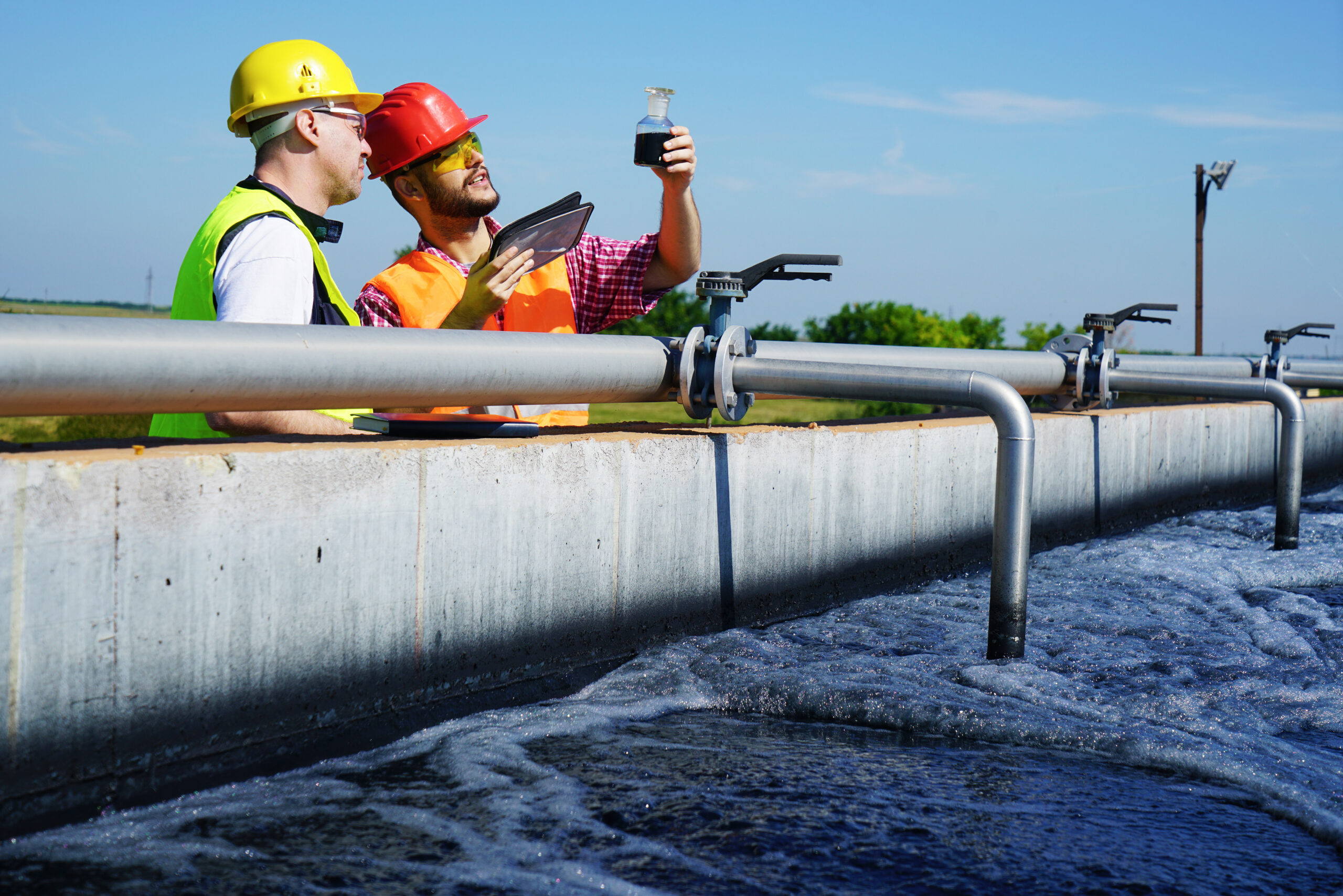
Geotechnical and structural engineers specializing in water projects design foundation, dams, levees and coastal structures (piers, seawalls) while managing complex hydraulic, seepage and soil stability issues. They crucially monitor and evaluate soil-water interaction to mitigate erosion, buoyancy and seismic risks. Field investigations, instrumentation and long-term monitoring are common parts of the job.
Mechanical and Electrical Engineers
Mechanical and electrical engineers in the water sector design, install and maintain critical infrastructure for water supply, treatment and distribution as well as hydropower systems. Mechanical engineers often design pumping systems, treatment plant equipment and hydraulic networks. Some mechanical engineers specialize in hydropower, focusing on turbine design, generators and converting kinetic energy to electricity. Mechanical engineers install and maintain pumps, mixers and filtration units in treatment plants. They also manage pipelines and flow in water/wastewater systems. Electrical engineers design electrical systems to drive pumps and treatment machinery. Electrical engineers also integrate SCADA (Supervisory Control and Data Acquisition) systems, sensors and controls for automatic water treatment. Electrical engineers also oversee the installation of electrical infrastructure and monitor it during operations.
Key Takeaway
Water Engineering takes multiple engineers working together to ensure safe water makes its way from the source to the tap, then back again, through wastewater treatment.
The Full Water Cycle
Behind every glass of drinking water is a complex journey, one that engineers design, build and maintain at every single step.
Source Water and Intake
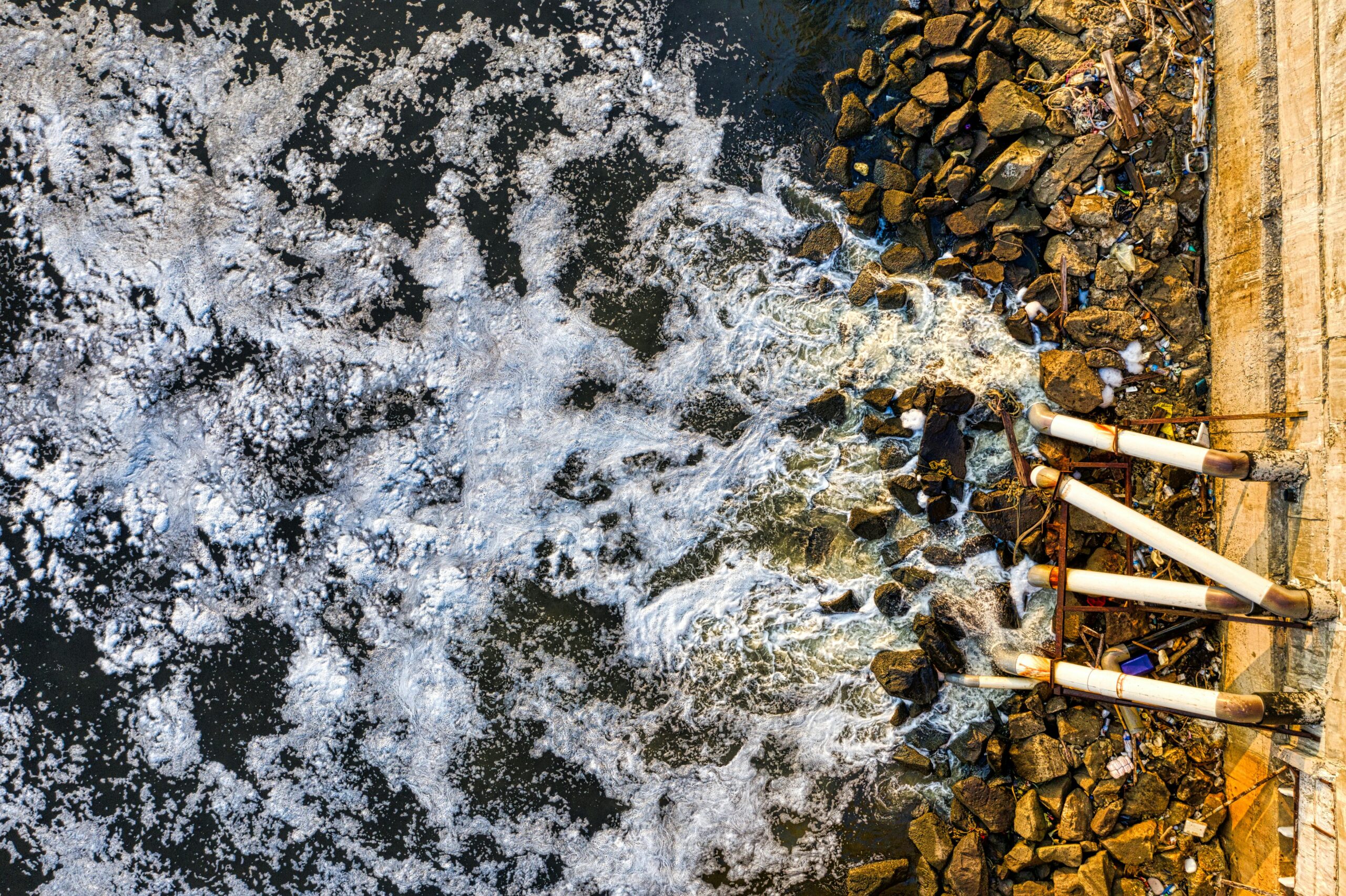
Engineers are already working to protect water before it even reaches the treatment plant. Reservoirs, rivers, lakes and other bodies of water all serve as sources of drinking water, and all sources require careful management. Civil and environmental engineers assess water quality at the source, design structures that minimize disruption to natural systems and develop protection plants that keep contamination from entering the water supply.
Treatment: Making Water Safe to Drink
Raw source water, no matter how clean it looks, is never safe to drink without treatment. Environmental and chemical engineers design water treatment systems that remove sediment, bacteria, viruses and other contaminants. These engineers work to meet both federal and state regulatory standards while balancing cost, energy efficiency and reliability. No matter the size of the community being served clean water, the goal is always the same: water that is safe, clean and consistently meets the standards people depend on.
Distribution: Getting Water Where It Needs to Go
Water treatment is only half of the process. Once the water is clean, it must travel through hundreds of miles of pipes, pumping stations and storage tanks to reach its destinations safely. Civil and mechanical engineers design these distribution systems to maintain pressure, prevent contamination after treatment and hold up under the demands of a growing population.
Wastewater Collection & Treatment
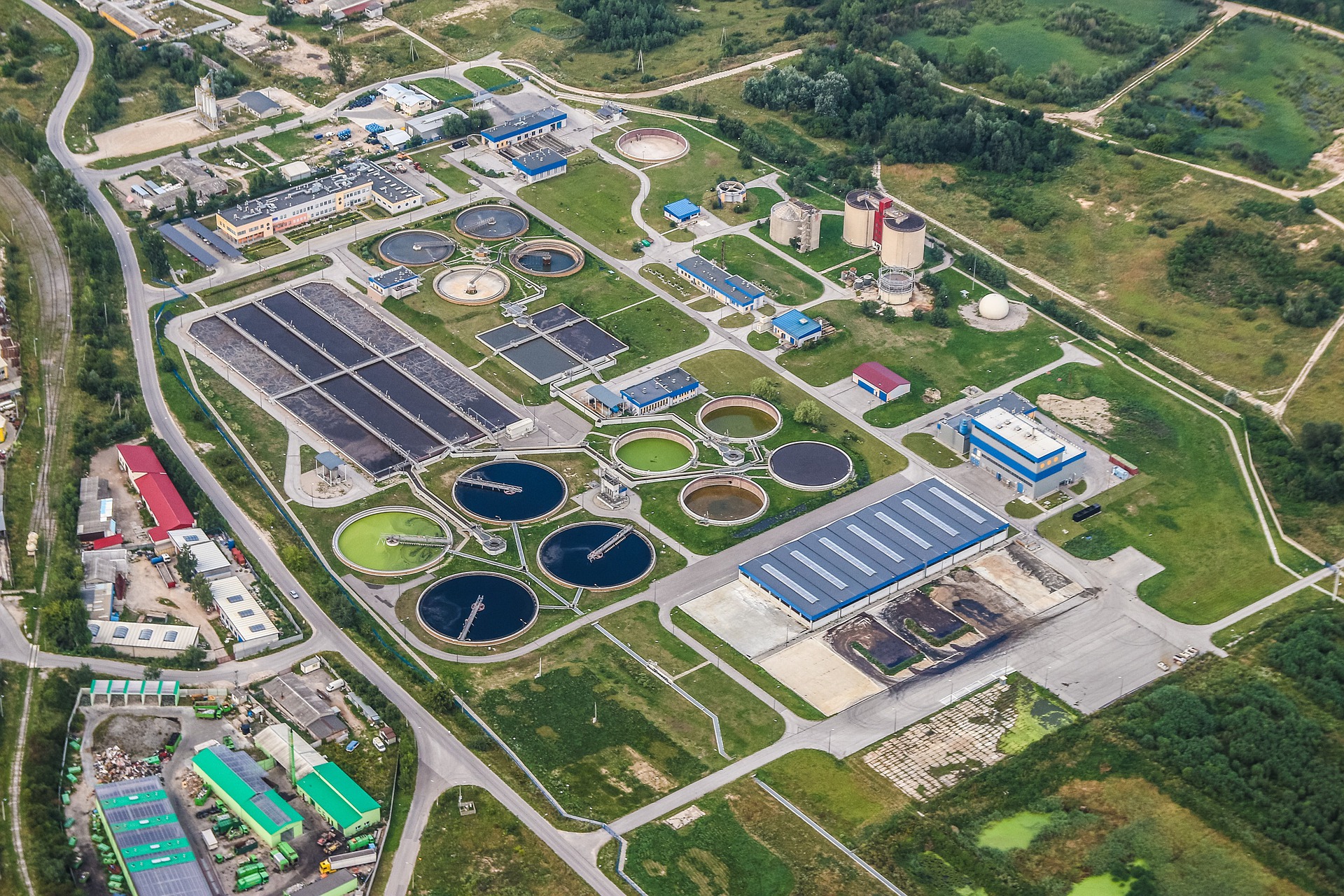
Water does not disappear after use. It flows down drains into a wastewater collection system, a network of sewer mains that environmental and civil engineers design for the water to then move safely to a treatment facility. At the wastewater treatment facility, the water then undergoes its own rigorous treatment process before being discharged and reused.
Stormwater Management
Rain and snowmelt add another layer of complexity to water/wastewater treatment. When water falls onto roads, pavement, parking lots and rooftops, it picks up pollutants (oil, bacteria, sediment, etc.) and carries those pollutants toward streams, rivers and groundwater supplies. Engineers design stormwater systems that slow this runoff, filter out contaminants and reduce flooding risks.
Why This Work is More Critical Than Ever
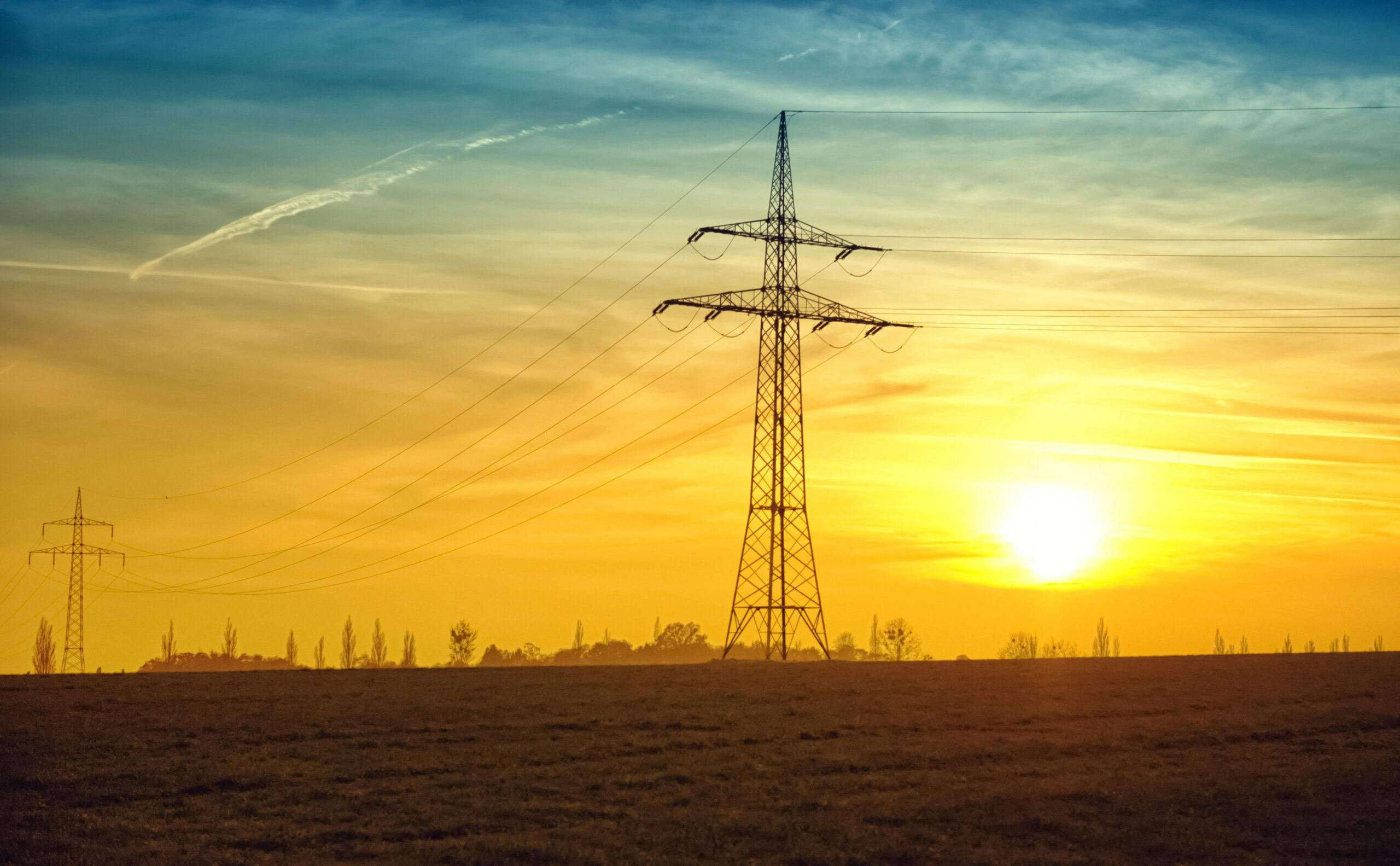
The engineering process behind clean water has always been essential. The pressure on water systems and the engineers who design and maintain them is greater than it has been in generations.
Aging Infrastructure
Much of the United States’ water infrastructure is very old. Water mains tend to have leaks and cracks. Treatment plants are often operating on outdated technology. Sewer systems that were designed for smaller populations now strain under the demands of growing populations.
A Changing Climate
Climate change is a threat for water systems. Droughts are reducing the availability and quality of water. Intense storms overwhelm aging stormwater systems. Flooding contaminates treatment facilities. Engineers are responding to climate change by designing more resilient infrastructure that is more adaptive and built to handle a wider range of conditions than ever before.
Growing Communities
Population growth and development put pressure on water systems that were not built to serve the demand of today’s population. New subdivisions, industrial facilities and expanding municipalities all need water and wastewater capacity that is yet to exist. Civil and environmental engineers are currently planning to design the expansions, upgrades and entirely new systems that make growth possible and sustainable.
Reaching Communities That Have Been Left Behind
Not every community has consistent access to clean water. Rural areas and small towns often operate inadequate systems. Engineers play a critical role in working with local governments to design practical, cost-effective solutions that bring safe water to everyone.
Engineering for A Smarter Future
This year, World Engineering Day has a theme of “Smart Engineering for Sustainable Future Through Innovation and Digitalization” which is very relevant within the water sector. Technology is transforming how engineers approach water challenges.
How McFadden Engineering Approaches Water and Wastewater
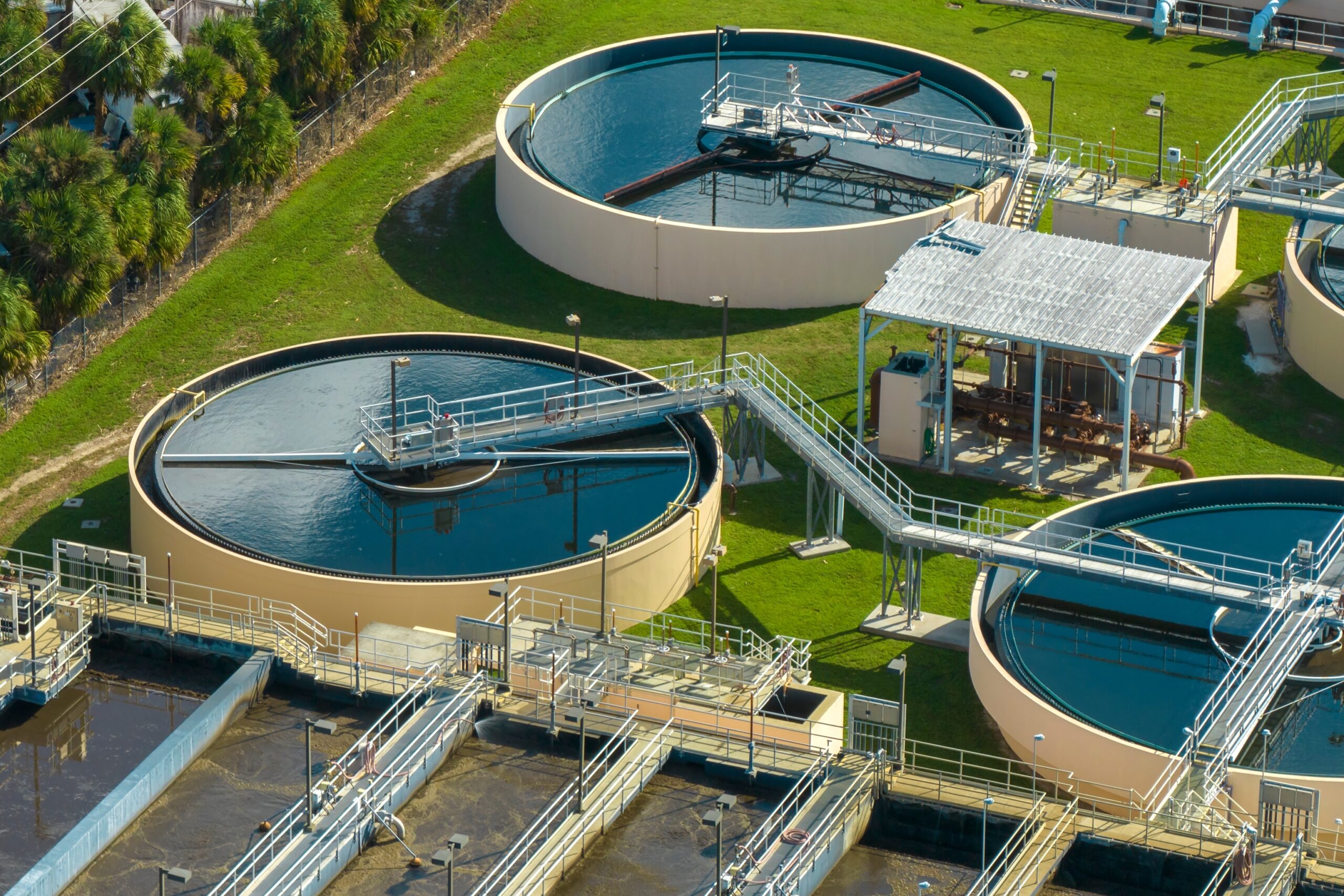
McFadden Engineering brings nearly a century of combined experience in civil and environmental engineering to the Southeastern United States. As active members of the Water Environment Federation, Partners for Environmental Progress and the Geological Society of America, we stay ahead of industry trends and are informed on research in our fields. With decades of experience in the water and wastewater sectors, McFadden Engineering is the expert when it comes to industrial wastewater treatment. We specialize in analyzing existing treatment processes and then optimizing and/or expanding those processes for the benefit of the client. Our goal for industrial wastewater treatment clients is to streamline treatment processes, achieve full compliance and ultimately reduce or eliminate surcharges and extra costs incurred from not meeting permit limits.
World Engineering Day and World Water Day fall just eighteen days apart. At McFadden Engineering, water and wastewater is a core part of who we are and what we do. We’re proud to be part of the engineering community working to solve one of the most fundamental challenges there is: making sure people have access to water that is clean, safe and reliable, today and for generations to come. This March, we’re celebrating both days with gratitude for the engineers who do this work, and with renewed commitment to doing it well.
Partner with McFadden Engineering to develop an industrial wastewater treatment solution that meets regulatory requirements, improves system performance and supports long-term operational goal.
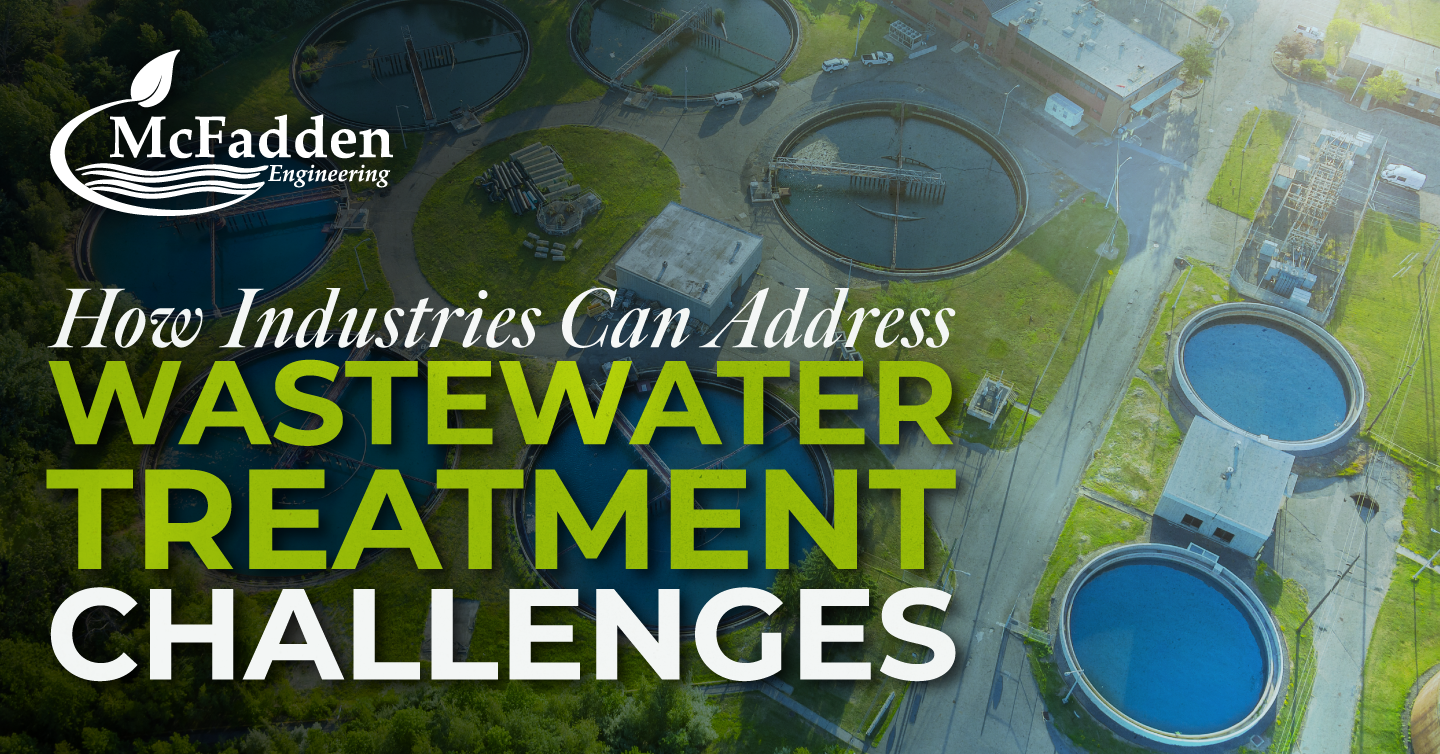
How Industries Can Address Wastewater Treatment Challenges
February 19, 2026
Understanding Wastewater Sources
Wastewater is an unavoidable byproduct of both daily life and industrial operations.
Residential wastewater is generated from everyday household activities such as washing, cooking, laundry and sanitation. This type of wastewater typically contains soaps, microorganisms, waste and organic matter.
On the other hand, industrial wastewater is usually highly concentrated and complex in nature and can contain visible pollutants or dissolved chemicals. It is produced through manufacturing, processing, cleaning and other industrial operations. Depending on the industry, industrial wastewater can contain high levels of oils and grease, suspended solids, metals, chemicals and other materials. Because of its strength and variability, industrial wastewater frequently requires specialized treatment processes before it can be discharged or reused.
Industries that Produce Wastewater
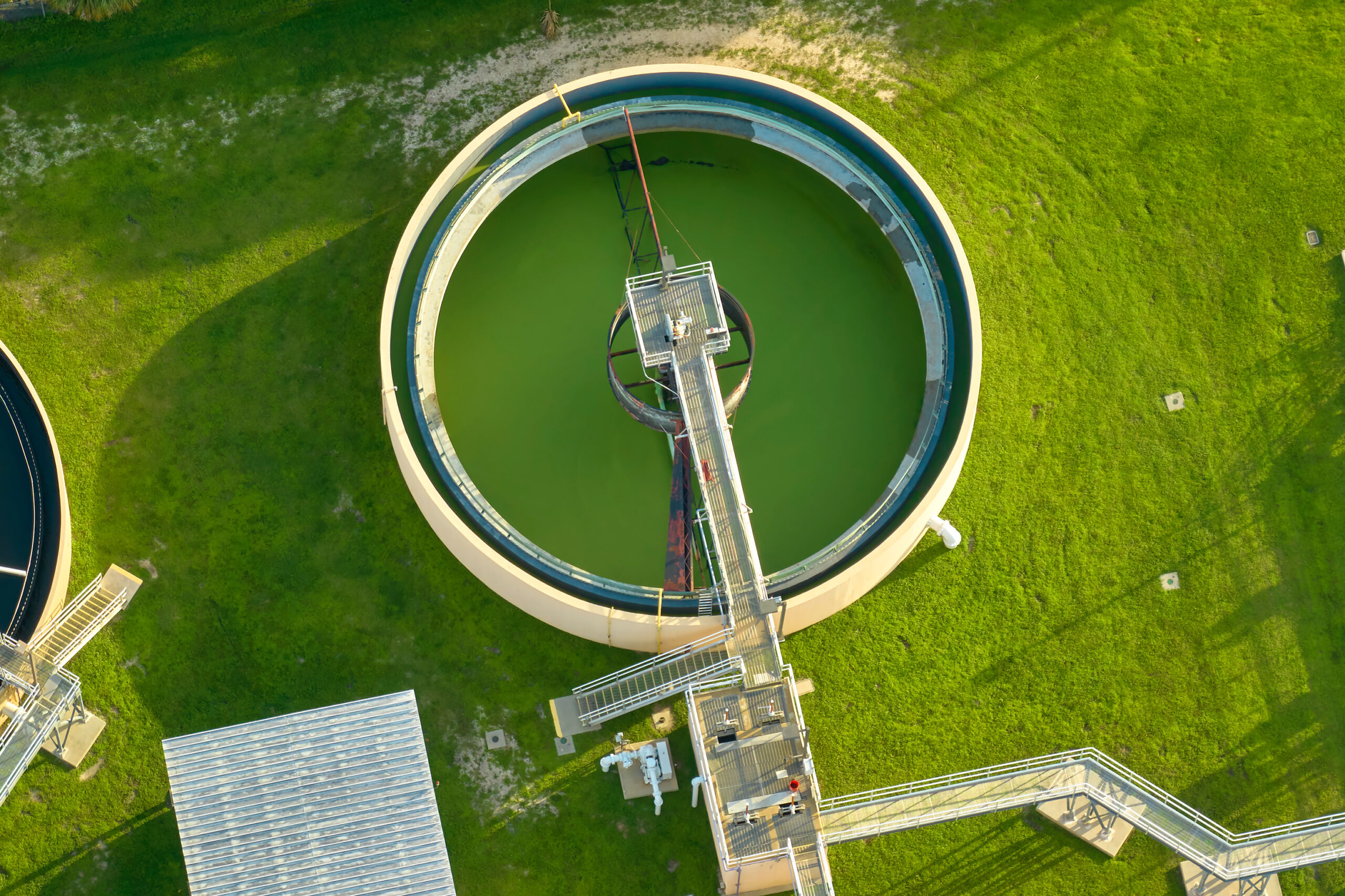
The Mobile area and the broader Southeast are home to a diverse range of thriving industries, from food and beverage manufacturing to oil and gas operations. Many of these facilities generate significant volumes of industrial wastewater, each with its own unique treatment challenges. McFadden Engineering works closely with customers in these industries to provide tailored wastewater treatment solutions that ensure compliance, efficiency and environmental responsibility.
Industries that have consulted our engineers include food and beverage, pulp and paper, wastewater acceptors, oil and gas drilling and more.
Food and Beverage
In the food and beverage industry, wastewater is typically generated during washing, processing and sanitation processes. This wastewater often contains sugars, fats, proteins and other materials that result in elevated Biochemical Oxygen Demand (BOD) levels. These can overwhelm municipal systems if not properly managed. Season production peaks and frequent sanitation cycles add further complexity, making consistent treatment performance a challenge.
Pulp and Paper
The pulp and paper industry produces wastewater from pulping, bleaching and other paper-forming processes. These wastewater streams include high levels of organic matter, harsh chemicals, metals and other contaminants which can be difficult to treat biologically and could require advanced chemical or physical processes to meet discharge limits. The volume of water used in the industry, combined with the complexity of contaminants, makes treatment design and optimization especially critical.
Oil and Gas Drilling
In oil and gas drilling operations, wastewater is generated from drilling fluids, equipment washdown and other operational processes. This wastewater may contain hydrocarbons, solids and chemical additives that require advanced treatment prior to discharge or reuse. Strict regulatory oversight and the risk of groundwater or surface water contamination demand robust treatment strategies that ensure safe discharge or reuse. Managing these waste streams is essential to protecting surrounding water resources and maintaining regulatory compliance.
Our Approach to Wastewater Treatment
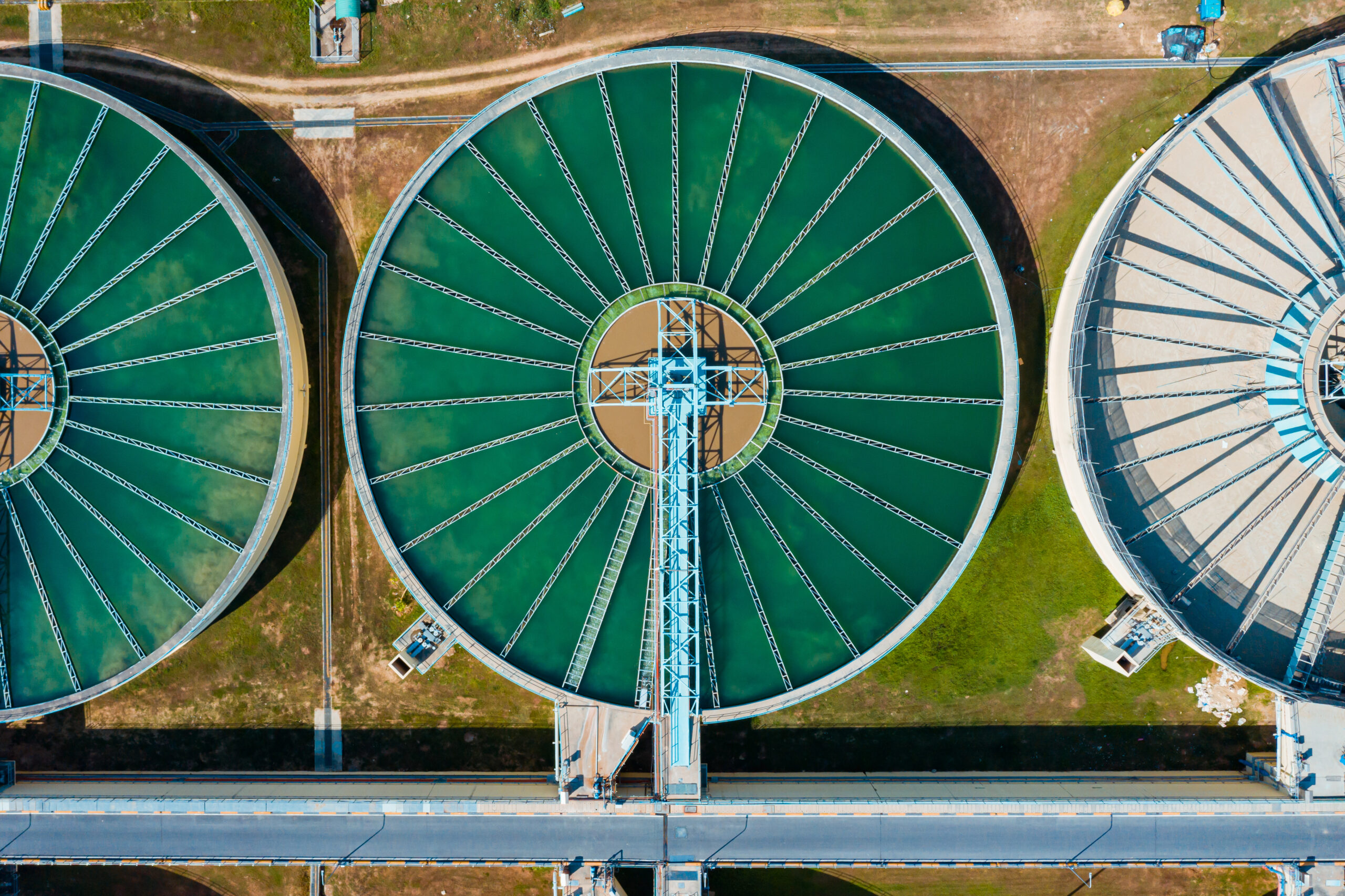
Each of these industries faces challenges related to wastewater variability, regulatory requirements and environmental responsibility. Variability in wastewater characteristics, evolving permit requirements, and aging infrastructure can make treatment systems difficult to manage. Proper evaluation and treatment are essential to ensuring that discharges meet applicable standards.
With decades of experience in the water and wastewater sectors, McFadden Engineering brings true expertise when it comes to industrial wastewater treatment. We understand that each wastewater treatment scenario is unique in its goals, including process requirements, permitting limits and other regulations. McFadden Engineering begins with a system evaluation and compliance review, then moves into planning for optimization of the wastewater treatment system and facilities.
Our services include:
- System evaluation and compliance review
- Planning for optimization of the wastewater treatment system and facilities.
- Assessing any opportunities to reuse water within the facility
- Streamlining treatment processes to achieve full compliance and ultimately reduce or eliminate surcharges and extra costs incurred from not meeting permit limits
Partner with McFadden Engineering to develop an industrial wastewater treatment solution that meets regulatory requirements, improves system performance and supports long-term operational goals.
Sustainable Infrastructure Keeps Communities Connected and Protected
January 16, 2026
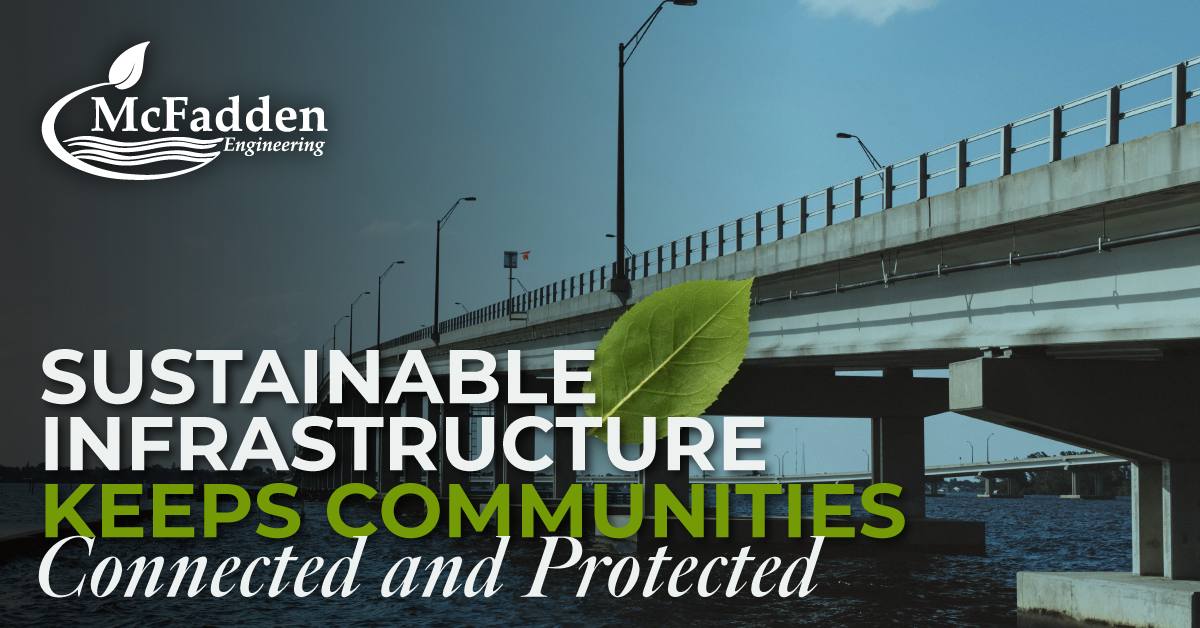
Public infrastructure makes up the backbone of how our country operates in its day-to-day. Cars, trucks, trains, boats and planes traverse land, air and water to move people and goods as quickly and efficiently as possible to keep up with our busy society.
Buildings are constructed to serve purposes from housing and office space to manufacturing and medical services. The infrastructure we can’t always see, like pipelines, sewage systems, digital networks and power lines, plays a huge role in providing daily necessities like electricity, natural gas and clean water.
Because infrastructure takes up so much space and touches many areas, even unknowingly, in our lives, it is critical for these systems to be sustainably designed, constructed and cared for to keep environmental and human health as a top priority.
What is Sustainable Infrastructure?
According to the International Institute for Sustainable Development, sustainable infrastructure involves the development of roads, buildings, energy and water infrastructure with consideration of economic, social and environmental implications. When infrastructure is carefully planned and consciously constructed, it can make a great impact on communities.
Sustainable Infrastructure in Alabama
Across the Southeast and here in our home state of Alabama, various sustainable infrastructure projects are both being developed and in the works. The Rebuild Alabama Act provides funding for road and bridge improvements across the state, with focus on generating economic growth and reinforcing safety on the state’s roadways. Additionally, the Bipartisan Infrastructure Law (BIL) offers funds for public transit, electric vehicle (EV) charging networks and rail improvements, which supports inclusive transportation options and aims to protect the environment. The BIL also provides grants for communities to improve drinking water, wastewater, and stormwater systems to protect environmental and human health by addressing dangerous contaminants.
In this part of the country, special consideration is made for potential regional hazards like hurricanes, floods, tornadoes, wildfires and other natural disasters when infrastructure projects are developed. One example is here in our own backyard, the I-10 Mobile River Bridge and Bayway, which is a large project to replace the low-lying Bayway with elevated bridges for storm resilience and better clearance for ships. New interchanges will also help motorists have an easier time navigating between Mobile and Baldwin Counties.
How McFadden Engineering Supports Sustainable Infrastructure
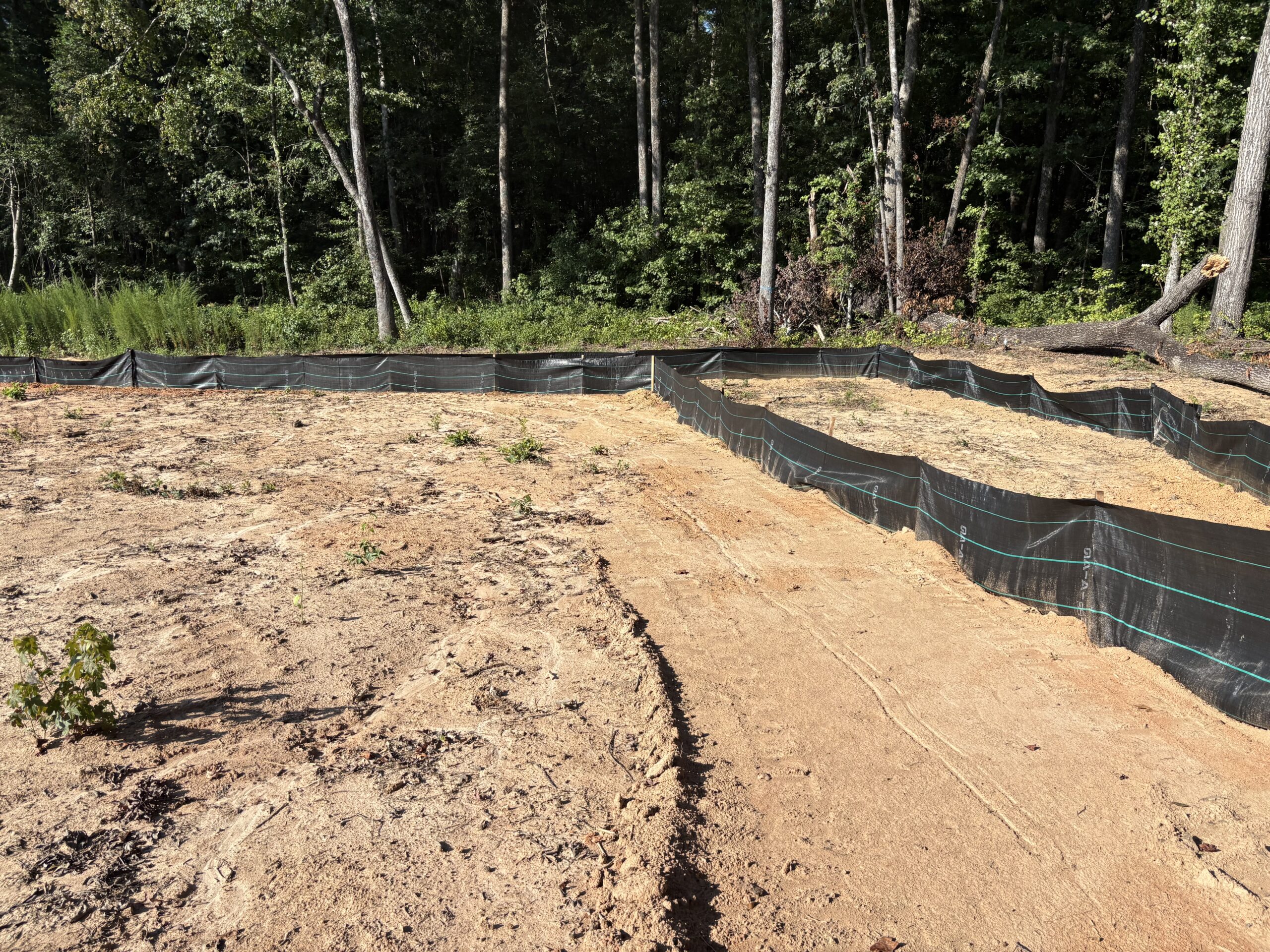
McFadden has played various supporting roles in sustainable infrastructure projects across the Southeast and the country, including a natural gas pipeline project in Georgia and various projects funded by Pipeline Hazardous Material (PHMSA) grants issued through the Department of Transportation (DOT). The work on these projects included environmental permitting, development of best management practices, evaluation of pipeline routes for environmental considerations such potential impacts on water bodies and wetlands, as well as the identification of environmentally sensitive areas within the project footprint.
The engineering team at McFadden can provide site assessment and remediation prior to project initiation and support environmental compliance efforts throughout projects, which are keys to developing sustainable infrastructure. Civil and environmental engineering services are critical for sustainable infrastructure projects to remain in compliance and be completed on time, and can include development master planning, grading and drainage plan development, detention/retention design and stormwater management.
McFadden also specializes in water and wastewater management, which is often a key component of infrastructure development and management. By evaluating the water and wastewater needs of the project, a solution can be developed that specifically addresses any problems.
No matter the type of sustainable infrastructure project or complexity of environmental implications surrounding it, McFadden is equipped to help. Browse our services and contact us today.
2025 Recap: Helping Clients Reach Environmental Compliance, Near and Far
December 15, 2025
As 2025 comes to a close, our team is proud to reflect on our various projects and accomplishments. McFadden Engineering experienced a year of growth, expansion and continued commitment to sustainable environmental engineering solutions to even the most challenging water and wastewater problems.
Compliance Work with ArcelorMittal Calvert
What began as a short-term compliance support project with AM Calvert, an industry-leading steel fabricator near Mobile, Ala., has evolved into ongoing work on a variety of engineering needs. McFadden supports AM Calvert through compliance monitoring, storm water monitoring, spill plan inspection services and implementation of best management practices (BMP).
In addition to compliance-related work, the McFadden team also upgraded AM Calvert’s sample collection systems by assisting the environmental team with designs to integrate auto-sampling equipment at numerous locations within the facility. McFadden has previously worked with AM Calvert on compliance for its steel mill, so the team welcomed the opportunity for an ongoing partnership.
Georgia Natural Gas Pipeline Project
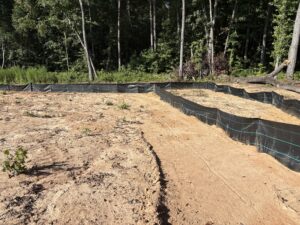 The installation and expansion of natural gas pipelines are a growing need across the country, including the Southeast. These projects are subject to strict environmental regulations, which made McFadden Engineering a perfect fit for ongoing environmental work for a large natural gas pipeline project in Northwest Georgia.
McFadden’s team of engineers worked on a 16-inch transmission pipeline construction project where they completed the environmental permitting and assisted with BMPs during Phase 1 of the construction. As Phases 2 and 3 prepare to begin, McFadden will continue its compliance work on the project.
Pipeline Hazardous Material (PHMSA) Department of Transportation Grants
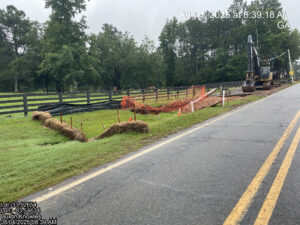
McFadden had additional opportunities to work in the natural gas sector this year thanks to Pipeline Hazardous Material (PHMSA) grants issued through the Department of Transportation (DOT). The grants support natural gas line upgrades for communities across the country, and the McFadden team spent time on the road to assist with the environmental work associated with the projects.
This year, the team has completed environmental work for associated projects in North Carolina, Ohio and Kansas. The work included evaluation of pipeline routes for environmental considerations such potential impacts on water bodies and wetlands, as well as the identification of environmentally sensitive areas within the project footprint.
Expanding Our Footprint
These projects and many others have culminated in a broader reach and an expanded footprint for McFadden Engineering during the past year. Our team continues to gain more work locally while also supporting projects across the country, from the Midwest to the East Coast and back down South.
We appreciate our clients near and far and look forward to continued growth in the coming year. If you need environmental compliance support in the new year, our team is here to help—browse our services and contact us today.
Managing the Treatment and Disposal of Hazardous Waste
October 13, 2025
The City of Mobile recently hosted a free household hazardous waste collection event for its residents. Household hazardous waste includes items that are not routinely picked up by bulk trash and garbage collection services, as they can be harmful to the environment and to humans if not disposed of properly. Both personal households and businesses have a responsibility to their communities to minimize the impact their waste, particularly hazardous waste, has on the environment.
What is Hazardous Waste?
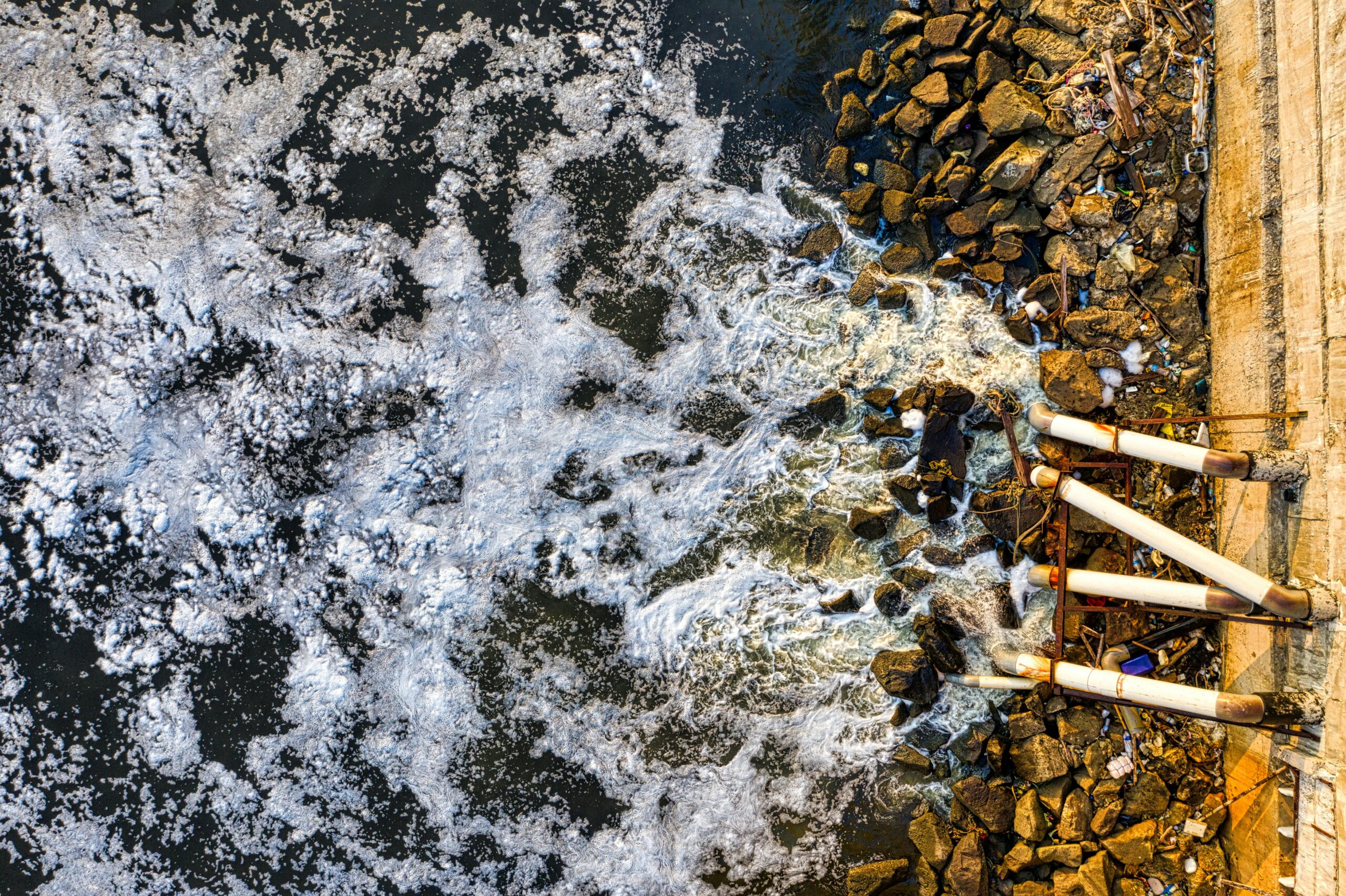
While common household items like paint, batteries, cleaners, fertilizers and medications often come to mind when discussing hazardous waste, industry is also a major contributor to hazardous waste issues. Many industrial manufacturing processes can produce hazardous waste in a variety of forms, including liquids, solids, gases and sludges. The Environmental Protection Agency (EPA) developed a regulatory definition and process that identifies hazardous substances and how they should be managed.
Industries that are prone to hazardous waste production include:
- Construction
- Dry Cleaning
- Educational and Vocational Shops (Automobile repair, Woodworking, Metalworking)
- Equipment Repair
- Furniture Manufacturing and Refinishing
- Laboratories
- Textile Manufacturing
- Transportation (Freight and Railroad)
- Pesticide Application and Cleanup
- Printing and Photo Processing
- Vehicle Maintenance
Companies in these industries must determine if they produce hazardous waste and, if so, must oversee waste processing, treatment and recycling or disposal. Examples of industrial hazardous waste include solvents, paints, pesticides, heavy metals and more.
Disposal and Recycling of Hazardous Waste
Regulations at both the federal and state levels are in place to help businesses recycle or dispose of hazardous waste properly. At the federal level, the EPA manages various standards, exclusions and exemptions for categories of hazardous waste – it is up to the business to understand the waste it produces and the regulations that apply in their industry and geographic location.
Proper disposal of hazardous industrial waste is critical to preserving the environment – especially drinking water – and protecting people from various toxins that can cause severe illness. Air, soil, water and wildlife are affected when hazardous waste disposal goes awry. Businesses can avoid costly fines and tarnished reputations by having a disposal plan in place.
Hazardous waste recycling is managed by its own set of regulations at the federal and state levels. When a material is reused, reclaimed or used in a way that constitutes disposal and burned for energy recovery, it is recycled. These approaches can reduce environmental hazards and protect natural resources.
At home, take-back programs like the one offered by the City of Mobile are ideal for disposing of household hazardous wastes. Residents should contact their municipal or county utilities office to find out more about local policies, regulations and disposal programs.
Experts Can Help with Hazardous Waste Assessment and Remediation
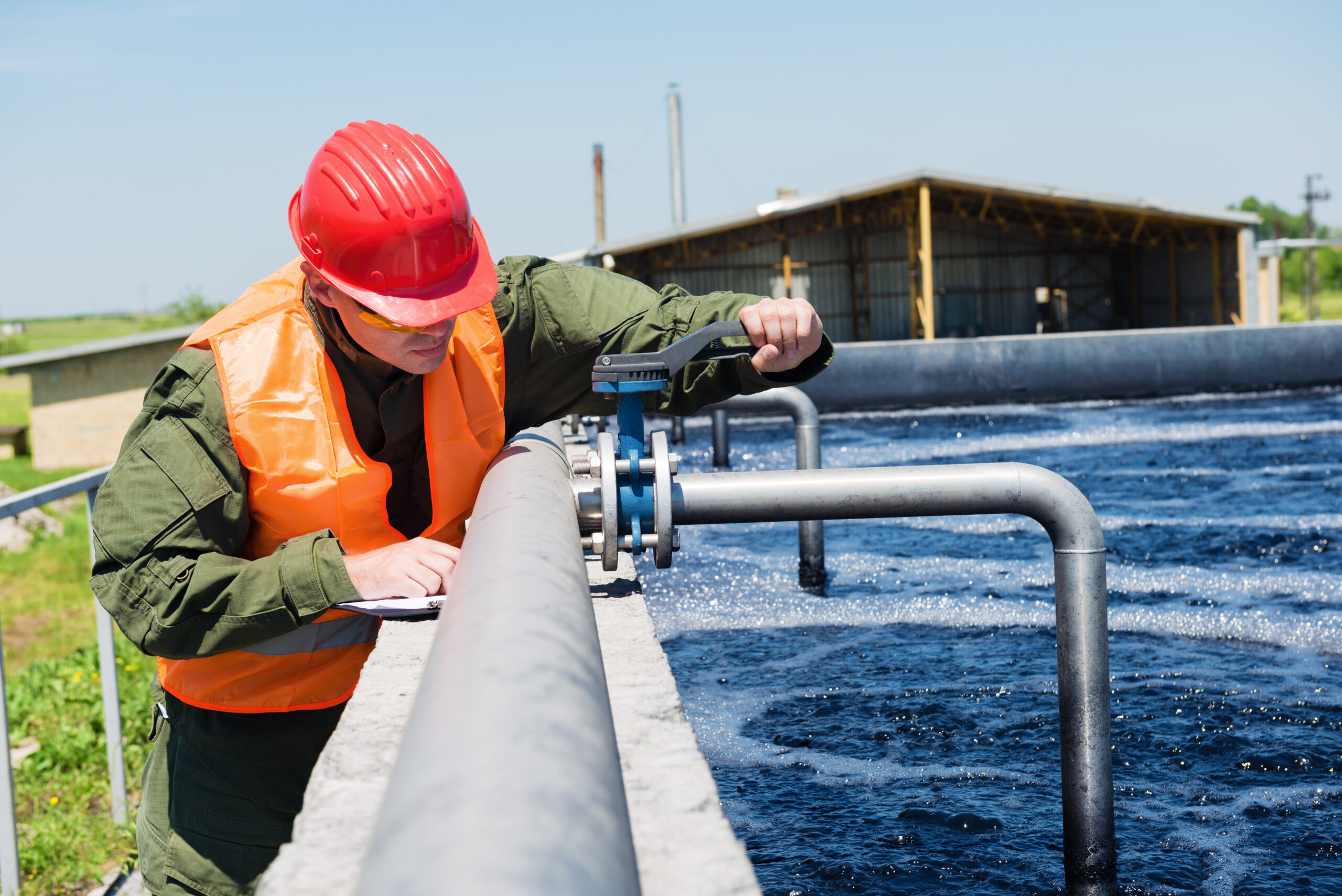 When operating a business that produces hazardous waste, proactive management can go a long way. Recycle and reuse materials when possible, and store hazardous waste properly until it can be recycled or discarded.
Environmental experts such as the team at McFadden Engineering support industrial companies through site assessment and necessary remediation, facility management and operations, water and wastewater treatment (which can be considered a form of hazardous waste recycling), environmental compliance and more.
Hazardous waste does not have to threaten environmental or human health. Instead, when waste is managed well and with expert support, companies can build public trust, reduce costs and lower the risk of environmental impact.
How to Help Your Organization “Go Green”
September 16, 2025
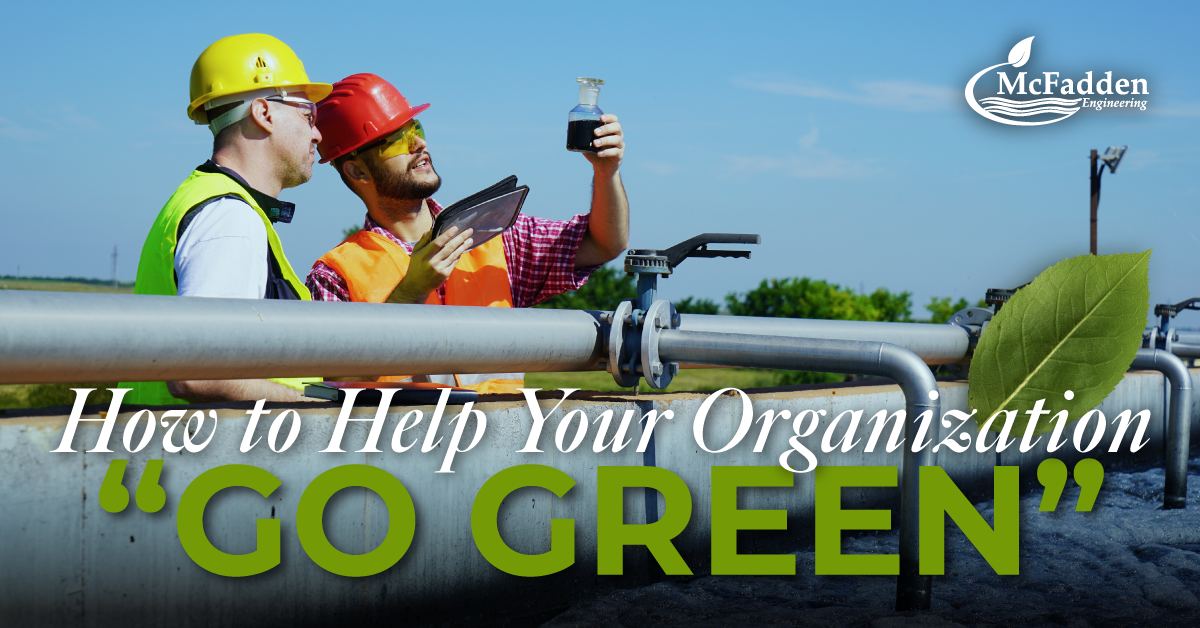
How to Help Your Organization “Go Green”
The “go green” movement has been growing and evolving for both individuals and businesses for decades. While simple swaps and environmentally conscious habits around daily living can support sustainability efforts at home, businesses that embrace going green have an opportunity to make a difference in their communities while boosting their bottom line.
Create an Eco-Friendly Culture
Buy-in from employees is a critical component of successful green office efforts. Educating employees about how they can play a role in sustainability efforts during their day-to-day work is a great first step. Encourage recycling, reusable water bottles, turning off electronics at the end of the day, environmentally conscious transportation and other small habits that, when added up, foster an eco-friendly culture.
Additionally, investing in environmentally friendly daily-use equipment can indicate to employees that the company takes sustainability seriously. Using hybrid or solar power systems, low-pressure water systems and rainwater collection tanks at the office are good places to start and can help lower utility costs over time.
For companies that operate machinery, water recycling can be an excellent option to cool systems and wash equipment while reducing operating and utility costs. Efficient use of water can also help conserve resources and save money – this could include operating water-based machinery when fully loaded, turning the air conditioning off when not in use and only using cooling equipment when necessary.
Transparency Builds Trust
Building an eco-friendly culture within an organization and following proper protocols for permitting and environmental compliance can help put your company on the map as a trustworthy, sustainability-focused business. Consumer perception is important, as many consumers are making sustainability a priority in their own lives and want the companies they buy from to do the same. Transparency about environmental wins, and even more importantly, any environmental issues, is crucial for building consumer trust.
Companies should aim to be authentic in their efforts to “go green” and document the steps taken along the way.
Outsource to the Environmental Experts
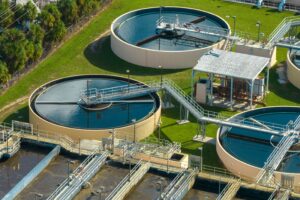 When it comes time to open a new physical location or embark on a new project where environmental regulations come into play, proper planning is crucial to success. An environmental engineering company can help develop master planning and conduct site assessments to help an organization remain in compliance and reduce the risk of excess spending and issues with the public down the road.
McFadden Engineering’s team is experienced in grading/drainage plan development, detention/retention design, stormwater management and other tasks that help businesses get their site up and running while keeping sustainability and compliance top of mind.
Once a plan is in place and initial assessments and permitting are complete, environmental engineering firms like McFadden Engineering can continue to support businesses in their sustainability efforts by managing facility operations, maintaining facility compliance, creating response plans for spills and developing treatment alternatives for permitted discharge limits. “Going green” is a continuous process, so having environmental engineers available to support large-scale sustainability efforts can ensure up-to-date and innovative solutions.
For more information about how McFadden Engineering can support your company in its sustainability efforts, view a list of our services.